
On June 16, 2026, SpaceX announced it is acquiring Anysphere, the company behind Cursor, for $60 billion in stock. That is the headline behind every SpaceX Cursor acquisition search this week, and it is not a rumor or a leak. It is a signed agreement, announced four days after SpaceX's record-breaking IPO, and it is the largest acquisition of a venture-backed startup in history.
I have written about Cursor a lot on this site. I reviewed Cursor 3 and its parallel agents, and I pitted it against Google Antigravity and GitHub Copilot in a head-to-head. So when a rocket company buys the IDE I use every working day, I want to know one thing before the hype cycle eats it: what actually changes for the people who use this tool? Here is the honest version: facts first, speculation clearly labeled as speculation.
How I reported this
What just happened: the facts
Let me keep this part dry, because the facts matter more than the narrative.
- SpaceX is acquiring Anysphere, the maker of Cursor, for $60 billion in an all-stock deal.
- It was announced June 16, 2026, at Cursor's "Compile" developer conference, four days after SpaceX completed the largest IPO in history on June 12.
- The deal traces back to an option signed April 21, 2026: SpaceX locked in the right to buy at $60B, with a reported ~$10 billion walk-away fee if it backed out.
- Anysphere shareholders receive SpaceX Class A shares priced on a seven-day volume-weighted average. The founders' net worths reportedly doubled overnight.
- It is widely described as the largest acquisition of a venture-backed startup ever, expected to close in Q3 2026, pending regulatory approval.
- Anysphere was founded in 2022 by four MIT students; Cursor launched in March 2023 and hit roughly $4 billion in annualized revenue in under four years.
At $60 billion on about $4 billion in revenue, SpaceX is paying close to 15× revenue: one of the largest multiples ever paid for an AI software company. Hold that number; it matters later.
Why SpaceX bought Cursor
This is the part that confuses people. SpaceX builds rockets. Why is it spending $60 billion on a code editor?
The short answer: SpaceX is no longer just a rocket company. Earlier in 2026, SpaceX merged with xAI, Elon Musk's AI lab and the team behind the Grok chatbot. That merger gave SpaceX an AI division, but a troubled one. All eleven of xAI's original co-founders had departed by March 2026, and the unit had been bleeding talent and credibility while Anthropic and OpenAI pulled ahead in developer tools.
Cursor fixes that in one move. It hands xAI an instant, dominant position in AI coding: a category xAI had basically no presence in. But the strategy goes deeper than buying market share, and this is where it gets genuinely interesting.
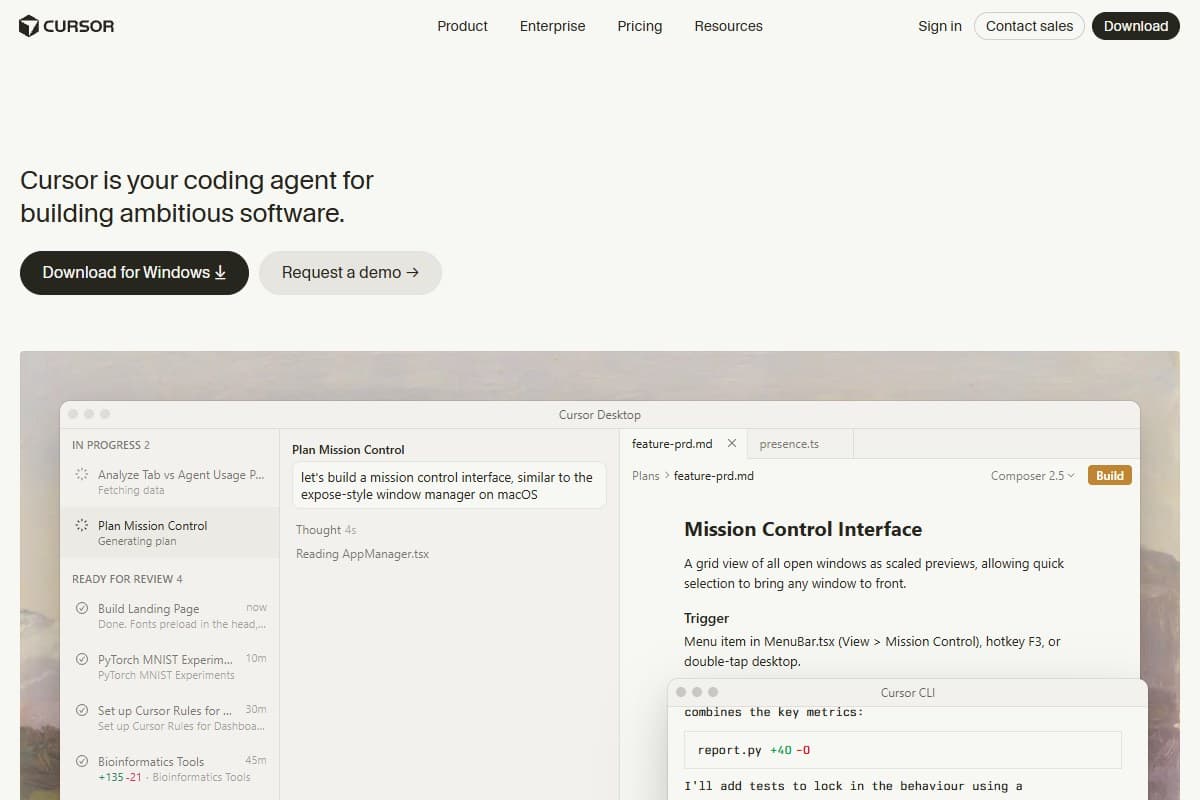
Origin. At the same conference, Cursor unveiled Origin: a Git hosting platform built for AI agents instead of humans. The pitch: GitHub assumes human-paced code review, but when agents commit, rebase, and open pull requests at machine speed, those assumptions become bottlenecks. Origin's demo numbers were eye-watering: roughly 22 commits per second and 296,000 clones per hour in a single repo, on an NVMe-plus-S3 architecture with AI-driven merge-conflict resolution. By owning the hosting layer, Cursor stops depending on GitHub, which Microsoft owns, and which sells the competing Copilot.
Compute and a model of its own. Cursor is reportedly training a 1.5-trillion-parameter frontier model from scratch on SpaceX's Colossus supercomputer in Memphis (the cluster Musk has compared to a million H100 GPUs). And the data flows both ways: Cursor's real developer sessions (actual coding reasoning, not just finished code) become a stated training input for Grok.
Stack those together and the logic is clear. SpaceX didn't buy a code editor. It bought a distribution channel, a data engine, and a GitHub replacement for its AI ambitions, and folded all three into xAI.
What Cursor actually is (for the non-developers reading)
If you are here because the headline mentioned Elon Musk and $60 billion, here is the 30-second version.
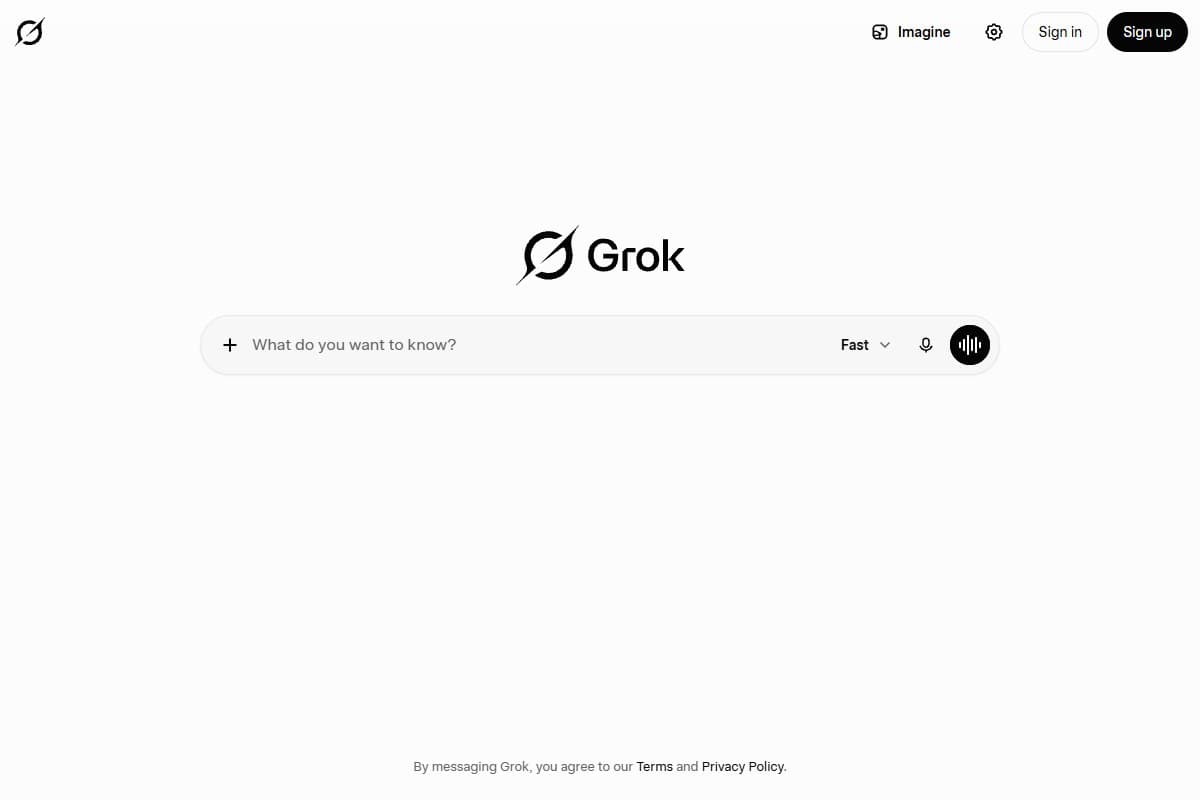
Cursor is an AI-powered code editor. It is a fork of VS Code, the most popular code editor in the world, with AI woven directly into it. Developers use it to write, edit, refactor, and review code by describing what they want in plain English, and increasingly by handing entire tasks to AI agents that work semi-autonomously.
- AI autocomplete: predicts and writes the next lines as you type.
- Chat in your editor: ask questions about your codebase, get fixes.
- Parallel agents: run several AI agents at once, each handling a different task. (I dug into this in the Cursor 3 review.)
The scale is the reason this acquisition is a big deal. Cursor reports more than 7 million monthly active users, over a million daily, and 50,000-plus paying teams: including developers at roughly two-thirds of the Fortune 500, generating around 150 million lines of enterprise code a day. This is not a niche tool. It is, by most measures, the most-used AI coding tool on Earth.
The $60B price tag: is it justified?
Here is where I stop reciting and start reasoning.
On paper, $60 billion for a company doing ~$4 billion in revenue, a 15× multiple, is steep but not insane by 2026 AI standards. Cursor was valued around $29 billion in its late-2025 raise, so SpaceX paid roughly double the last private mark. For a category leader growing this fast, that is the kind of premium acquirers pay for dominance.
But three things complicate the "bargain" case.
First, it is all stock. SpaceX is spending freshly minted, freshly public shares: not cash. That is cheaper for SpaceX, but it diluted shareholders, and the market noticed (more on that below).
Second, Cursor's market share is sliding. One analysis put Cursor's share of the AI coding market at about 41% in June 2025, down to roughly 26% by May 2026 as Antigravity, Copilot, and others closed in. SpaceX may be buying at the peak of the brand, not the peak of the moat.
Third, and this is the honest caveat, nobody actually knows what Cursor is worth inside SpaceX. If Origin and the Colossus-trained model work, $60 billion looks cheap in three years. If the deal triggers a model-access fight or a user exodus, it looks like an overpay. Both are live possibilities. Anyone telling you they know which way it breaks is guessing.
What changes for existing Cursor users
This is the question I actually care about, so let me be precise about what is confirmed versus what is feared.
Confirmed: nothing changes today. The deal hasn't closed. Cursor keeps running as a product, your subscription works, your editor is the same one you opened this morning. Current pricing is unchanged: $20/month for Pro, $40/user/month for Business.
Likely, but not confirmed: the things to watch:
- Pricing pressure. Large acquirers rarely lower prices on acquired tools. Several analysts expect Cursor's economics to eventually "re-anchor" to xAI's compute costs. If you run a team on Cursor, budget for the possibility of increases after close: don't assume $20 is forever.
- Model neutrality. This is the big one. Cursor today lets you pick Claude, GPT, Gemini, or local models. But Anthropic and OpenAI are now direct competitors of xAI. There is a real risk that access to their models gets deprioritized, throttled, repriced, or that Grok becomes the favored default. If your workflow depends on Claude or GPT inside Cursor, this is the thing to watch most closely.
- Your code as training data. Cursor was known for strong zero-data-retention guarantees that enterprises leaned on during procurement. Those commitments were written under Anysphere. An ownership change doesn't automatically void them, but a guarantee is only as durable as the next owner wants it to be, and reporting suggests Cursor session data is slated to feed Grok's training.
- Roadmap pace. Big acquisitions historically slow the roadmap of fast-moving developer tools. Cursor shipped at a remarkable clip as an independent startup. Whether it keeps that pace inside a $2-trillion conglomerate is an open question.
My read: if you're an individual developer, there's no reason to panic or switch this week. If you're an enterprise that chose Cursor specifically for model choice and data guarantees, this is the moment to re-read your contract and have a backup in mind.
What this means for the competitors
A consolidation this big reshapes the whole board. Here's who it touches.
Google Antigravity 2.0
Of the major rivals, Antigravity may benefit most. Cursor's pitch was always neutrality: the independent tool any company could adopt regardless of cloud. That neutrality evaporates the moment it's a SpaceX subsidiary. For frontend-heavy teams, Antigravity 2.0's browser agent was already a strong differentiator; now it can also sell itself as the un-acquired option backed by Google's own models. Expect Google to lean hard on "stable, independent, multi-model" messaging.
GitHub Copilot
Copilot is the incumbent with the most to gain and the most to prove. Microsoft owns GitHub, and Origin is an explicit shot at GitHub's hosting dominance, so this is now partly a platform war, not just a tools war. But Copilot also wins the risk-averse enterprise that doesn't want its code editor owned by Elon Musk. If you're weighing the field, my GitHub Copilot alternatives guide lays out the trade-offs, and the three-way comparison still holds up.
Claude Code
Anthropic's Claude Code sits in the strangest spot. Many developers (myself included) pair Cursor for editor work with Claude Code for the hardest reasoning. If Cursor deprioritizes Anthropic's models, Claude Code becomes more attractive as the place to actually run Claude: not less. Anthropic is reportedly preparing an IPO of its own, and a rival turning hostile to its models only sharpens the case for owning the full stack.
Developer community reaction: the honest version
I read the threads so you don't have to, and the reaction is not the uniform celebration the press releases imply.
The Hacker News discussion ran hot: hundreds of points, the usual split between "incredible outcome for the founders" and "I do not want Elon Musk owning my code editor." The three concerns that came up again and again were exactly the ones above: pricing, model neutrality, and product independence. The most legitimate fear, voiced repeatedly, was the boring one: that a fast, beloved tool gets slower and more political under a giant parent.
And the market was openly skeptical. After the announcement, SpaceX stock fell about 6%, and a two-day slide wiped roughly $620 billion off its market value: dragging it from a ~$3 trillion peak down toward $2.37 trillion. One Hacker News thread title summed up the mood with dark humor: "SpaceX Loses $600B After Announcing Acquisition of Cursor." Morningstar trimmed its fair-value estimate citing dilution, though not every analyst was bearish: Oppenheimer actually raised its target. Translation: smart people genuinely disagree on whether this was brilliant or reckless.
That disagreement is the real story. This isn't a clean win or an obvious disaster. It's a massive, genuinely uncertain bet.
The bigger picture: SpaceX is becoming an AI company
Step back far enough and this stops being about a code editor at all.
A year ago, SpaceX was a rocket and satellite business. In 2026 it has merged with xAI, IPO'd at a historic scale, and spent its first post-IPO move on the most popular AI coding tool in the world. In its IPO pitch, SpaceX reportedly waved at a $28 trillion addressable market: $26 trillion of it tied to AI. That is not a company that sees itself as a launch provider with a chatbot on the side. That is a company repositioning itself as an AI platform that also happens to fly rockets.
Cursor is the clearest signal yet. With Origin, SpaceX gets a GitHub competitor. With Colossus, it gets the compute to train frontier models. With Cursor's 7.5 million developers, it gets distribution and a constant stream of high-quality coding data to feed Grok. Owning the editor, the host, the model, and the compute is a full-stack play: the same vertical-integration instinct that built Starship and Starlink, pointed at software.
Whether that vision survives contact with reality: antitrust scrutiny, model partners turning hostile, developers who simply don't want Musk in their toolchain: is the open question of the next 18 months. But the ambition is unmistakable. SpaceX isn't dabbling in AI anymore. It's going all in.
FAQ: SpaceX's Cursor acquisition
How much did SpaceX pay for Cursor?
SpaceX agreed to acquire Anysphere, Cursor's parent company, for $60 billion in an all-stock deal announced June 16, 2026. It's the largest acquisition of a venture-backed startup on record, valuing Cursor at roughly 15× its ~$4 billion in annual revenue and about double its late-2025 private valuation of ~$29 billion.
Will Cursor's pricing change for existing users?
Not yet: the deal hasn't closed, and pricing is unchanged at $20/month for Pro and $40/user/month for Business. Longer term, several analysts expect upward pressure as Cursor's economics align with xAI's compute costs. Nothing is confirmed, but if you run a team on Cursor it's worth budgeting for the possibility of increases after the Q3 2026 close.
Will Cursor still support Claude, GPT, and Gemini?
This is the biggest open question. Cursor currently supports Claude, GPT, Gemini, and local models, but Anthropic and OpenAI are now direct competitors of xAI, so there's a real risk those models get deprioritized, throttled, or repriced in favor of Grok. Nothing has been announced. If your workflow depends on a specific model inside Cursor, watch this closely and keep a backup tool in mind.
Is my code safe now that SpaceX owns Cursor?
Cursor's existing zero-data-retention commitments still apply today, and an ownership change doesn't automatically void them. The concern is durability: those guarantees were written under Anysphere, and reporting suggests Cursor session data is slated to become a training input for xAI's Grok. Enterprises that chose Cursor specifically for its data guarantees should re-read their contracts before the deal closes.
What is Origin, and why does it matter?
Origin is a Git hosting platform Cursor unveiled alongside the acquisition: built for AI agents rather than humans, with demo throughput of roughly 22 commits per second. It matters because it's a direct competitor to GitHub, which Microsoft owns and which powers the rival GitHub Copilot. By controlling the hosting layer, SpaceX-owned Cursor reduces its dependence on a platform run by a competitor.
Should I switch away from Cursor because of this?
For most individual developers, there's no urgent reason to switch this week: the product works exactly as it did before. The case for having a backup is strongest if you're an enterprise that chose Cursor for model neutrality or data guarantees, since both are now uncertain. If you want to compare options, the three-way Cursor vs Antigravity vs Copilot breakdown is the place to start.
Final thoughts
I've covered a lot of AI tool news on this site, and this is the biggest story I've written about. A rocket company just bought the most popular AI coding tool in the world for $60 billion, in stock, days after going public. That sentence would have sounded absurd two years ago. In 2026 it's Tuesday.
Here's where I land. The deal is real and the strategy is coherent: Origin, Colossus, and Cursor's data give xAI a genuine full-stack shot at the AI coding market. But the things that made Cursor great for users: model choice, fast iteration, strong data guarantees, and a neutral, un-conglomerated owner: are exactly the things this acquisition puts in question. None of them have broken yet. All of them are now worth watching.
My advice is simple: don't panic, don't switch on reflex, but don't sleepwalk either. Keep using Cursor if it works for you, watch the model-neutrality and pricing questions closely over the next two quarters, and know what your backup is. The honest truth is that nobody (not me, not the analysts, not the people cheering or jeering on Hacker News) knows exactly how this plays out. That uncertainty is the story.
Related reading
- Cursor 3 Review: Are Parallel Agents Worth It?: my hands-on review of the tool SpaceX just bought.
- Google Antigravity 2.0 vs Cursor 3 vs GitHub Copilot: the three-way comparison, now more relevant than ever.
- Google Antigravity 2.0 Review: the strongest "independent" alternative if Cursor's neutrality worries you.
- GitHub Copilot Alternatives 2026: the full field of AI coding tools to weigh.
Got a question about the SpaceX–Cursor deal I didn't cover, or a take of your own? Get in touch: reader questions shape the next round of coverage.
Free interactive tool
Compare AI tools side-by-sideSide-by-side pricing, features, and ratings — plus a recommended pick for your use case.
Independent AI tools researcher
Keep reading
Related reviews
Claude Fable 5 Just Went Behind a Paywall: Is It Worth Paying For?
Claude Fable 5 is no longer free: from June 23 it needs paid credits. Users got just 4-5 days free instead of the promised 13. The full story.

How AI Is Powering the 2026 FIFA World Cup (Behind the Scenes)
The 2026 FIFA World Cup is the biggest live AI deployment ever: from refereeing to broadcast. Here's what's actually happening behind the scenes.

Claude Is Now on Your iPhone: Apple's Multi-AI Siri Changes Everything
Apple just made Claude a selectable iPhone assistant in iOS 27. Here's what the multi-AI Siri means for you and the future of AI assistants.