
When I reviewed it two weeks ago, Claude Fable 5 was free on every paid Claude plan and I told you to go stress-test it while the testing cost nothing. That advice has an expiry date now. The story behind Claude Fable 5 pricing in 2026 got messy fast: the free window was supposed to run 13 days, a US government export order took the model offline in the middle of it, and the paywall arrived on schedule anyway on June 23. Net result: most subscribers got roughly 4 to 5 days of the two weeks they were promised.
This is the follow-up to my original Claude Fable 5 review. I want to do two things here: lay out exactly what happened (the timeline is genuinely confusing, and some of it is still unresolved), and answer the question now sitting in front of anyone who fell for the model during its brief free run: is it worth paying for? Facts first. Opinion clearly labeled as opinion.
How I reported this
What just happened: the paywall facts
Let me keep this part dry.
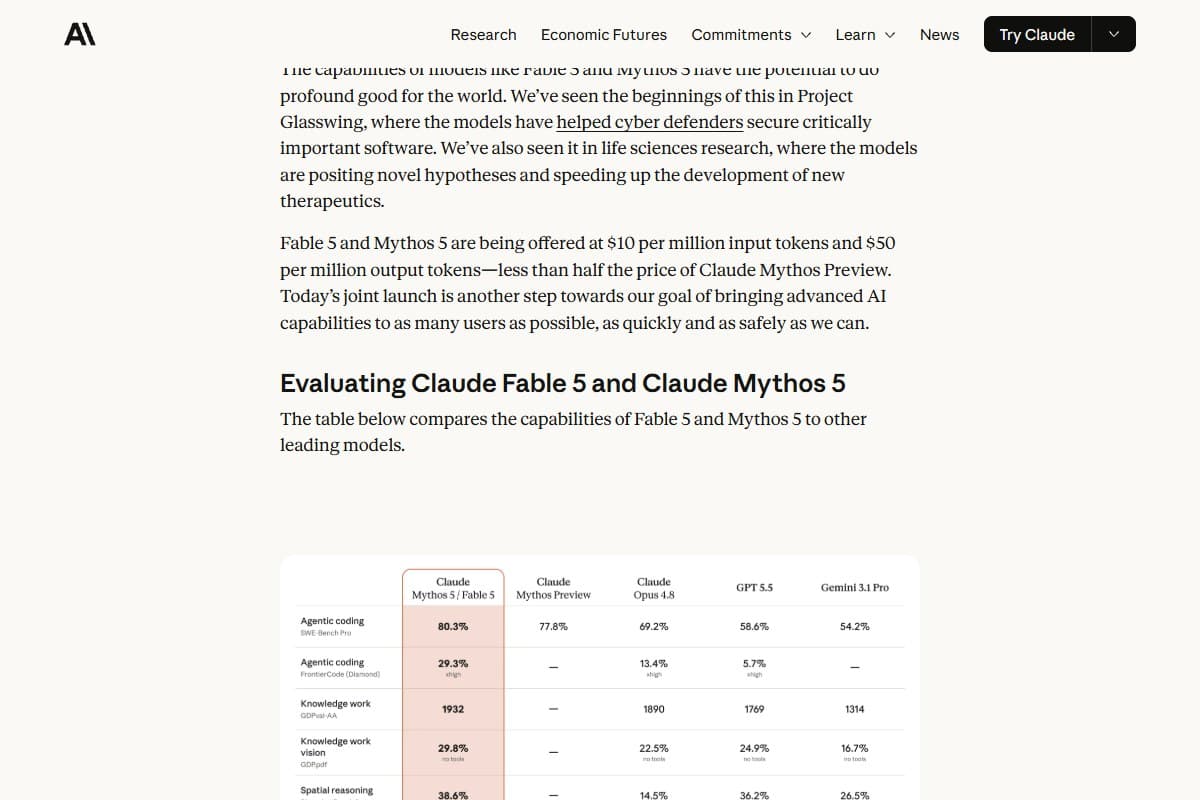
- As of June 23, 2026, Claude Fable 5 is no longer included in the usage limits of Claude Pro, Max, Team, or seat-based Enterprise plans.
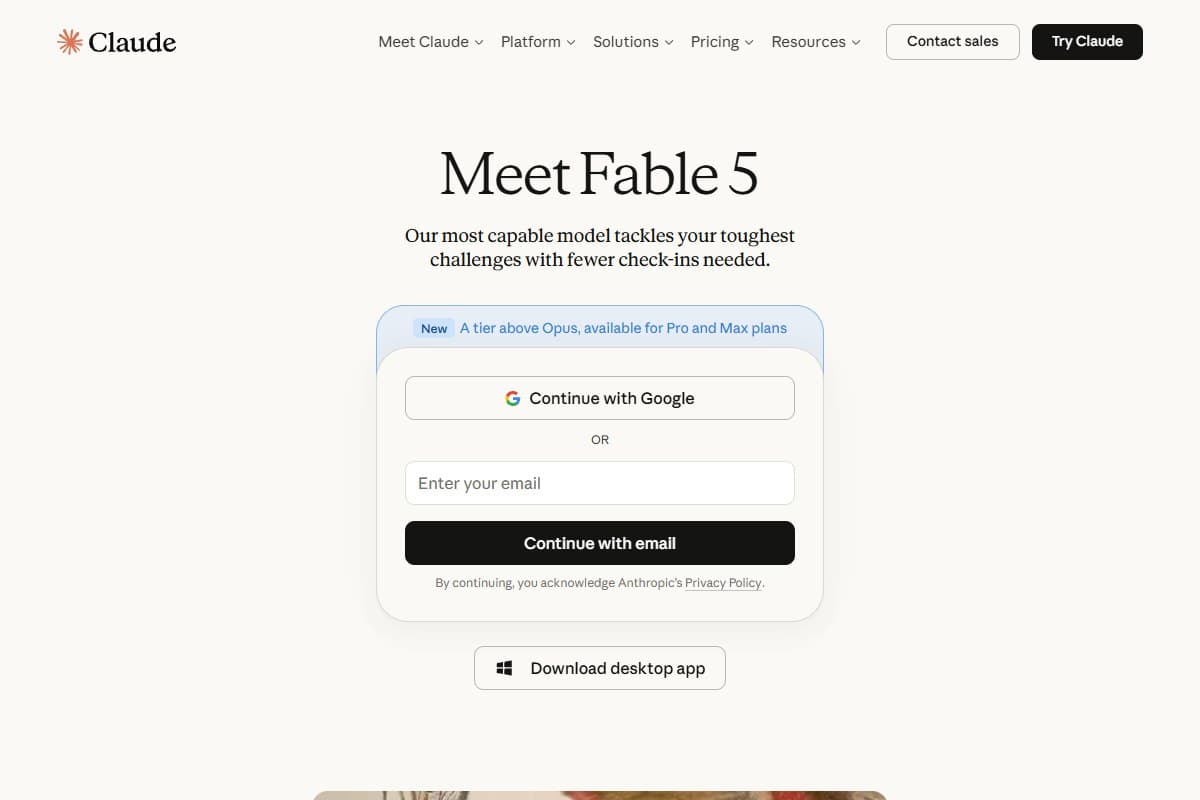
- It still appears in your model picker, but selecting it now draws down paid usage credits billed at API rates instead of your bundled plan allowance.
- Those rates are $10 per million input tokens and $50 per million output tokens: exactly double Claude Opus 4.8's $5/$25, and the most expensive generally available model Anthropic ships.
- Batch processing halves it to $5/$25 for non-urgent jobs, and prompt caching gives a 90% discount on cached reads (around $1 per million).
- Anthropic frames this as a capacity decision, not a permanent pricing tier, and says it intends to "restore Fable 5 as a standard part of subscription plans" once capacity allows.
That last point matters and I'll come back to it. The paywall may be temporary. The way users arrived at it is the part that stung.
The 13-day free window: what Anthropic promised
When Fable 5 launched on June 9, 2026, the deal was clear and genuinely generous: the first publicly available Mythos-class model, included at no extra cost on every paid Claude plan from June 9 through June 22, a 13-day complimentary window, with metered usage credits kicking in June 23.
I said at the time this made the launch fortnight "the cheapest this model will ever be," and I meant it. Two weeks of the most capable public model on a $20 Pro plan is a real offer. The catch I flagged back then was the usage weighting: even during the free window, Fable 5 counted roughly double the usage of Opus toward your plan limits, so "included free" never meant "use freely." A heavy Fable session burned your allowance about twice as fast as the same work on Opus 4.8.
That was the known catch. Then an unknown one showed up.
The export control disruption: why you only got 4-5 days
Here's the part nobody saw coming.
On June 12, 2026, three days into the free window, the US Commerce Department ordered Anthropic to suspend access to Claude Fable 5 and Claude Mythos 5 under the Export Administration Regulations. Commerce Secretary Howard Lutnick sent CEO Dario Amodei a letter directing the company to place both models under export controls, prohibiting access "by any foreign national, whether inside or outside the United States," citing a jailbreak with claimed national-security implications.
Because Anthropic couldn't reliably filter users by nationality in real time across dozens of global cloud platforms, it did the only thing it judged compliant: it disabled both models for everyone, worldwide. Not just foreign nationals. Everyone.
So the math on the "13-day" window falls apart like this:
- June 9–12: Fable 5 live and free: about 3-4 days.
- June 12–18: global blackout. The model is gone for all users while Anthropic and the government work it out.
- June 23: the paywall lands on the original schedule.
Stack those up and the promised two weeks of free access compressed into roughly 4 to 5 usable days, and that's the optimistic reading. Here's the honest wrinkle: the sources don't fully agree the model came cleanly back at all. Some reporting has Fable 5 returning around June 18; other coverage as late as June 24 still described both models as offline for every user with no official restoration date. Anthropic's own statement said only that it was "working to restore access as soon as possible." So depending on which day and which account you trust, a lot of subscribers may have paid for a flagship model they could barely touch before the meter switched on.
Anthropic's response: the June 20 refund deadline
To Anthropic's credit, it didn't pretend nothing happened. The company offered refunds to subscribers who paid between June 9 and June 14: the window covering people who signed up specifically for Fable 5 and then watched it vanish.
The catch was the clock. The refund window closed at 11:59 PM on June 20, 2026. If you subscribed for Fable 5, got a few days, lost it to the export order, and didn't happen to be following the news closely that weekend, the deadline to claim your money back may have passed before the model was reliably restored and before the June 23 paywall even arrived. That sequencing is the genuinely awkward part: you had to ask for a refund for a disruption that, by some accounts, was still ongoing when the deadline hit.
I want to be fair here: the suspension itself was not Anthropic's fault. A government export directive is not something a company negotiates its way out of in an afternoon, and Anthropic pushed back publicly, arguing the cited jailbreak exposed "minor, previously known vulnerabilities" rather than a universal break of Fable 5's safeguards. The refund offer was the right instinct. But a 24-hour-news-cycle refund window during an unresolved outage put the burden of vigilance on users, and plenty of them are understandably annoyed.
Current Fable 5 pricing: usage credits explained
So what does it actually cost now? Here's the structure, in plain terms.
- Fable 5 NO LONGER bundled after June 23
- Selecting it now spends usage credits
- Other Claude models still included
- Best for: occasional Fable use on top of a plan
- $10 per million input tokens
- $50 per million output tokens
- Double Opus 4.8's $5/$25
- Best for: the hard tasks that justify it
- Half price for non-urgent jobs
- Async processing
- Best for: bulk, latency-tolerant work
- 90% discount on cached input
- Helps repeated-context workflows
- Best for: agents reusing long prompts
The mental model that matters: usage credits draw down at the same per-token API price, not some friendlier consumer rate. There's no separate "app discount." When you pick Fable 5 in the Claude app now, you're metering tokens at $10/$50 on top of the monthly plan you already pay. For short chats that's pennies: a million tokens is a lot of text. For heavy coding sessions, long-document analysis, or anything agentic that loops, it adds up faster than people expect, because output tokens (the expensive $50 side) pile up quickly when the model writes a lot of code or long reports.
Is Fable 5 worth paying for? My honest verdict
Short answer: for a narrow set of work, yes. For most people, not yet, and not at this price.
Nothing about the paywall changed how good the model is. In my original review I gave Fable 5 a 4.7 because the capability gap over Opus 4.8 is visible in real work within an hour: one-shot answers on coding tasks where Opus needed three rounds, document analysis with clause-level citations that survived spot-checking, the best vision extraction I'd used. That's all still true. The model didn't get worse; the deal got worse.
Same elite model, but at $10/$50 it only pays off when a better answer is worth more than the token premium: hard engineering, high-stakes analysis. For routine work, Opus 4.8 at half price is the rational default.
So the honest framing is a workload test, not a vibe. If a single failed attempt from a cheaper model costs you more than the token premium: a thorny refactor, a contract review where a missed clause is expensive, a research synthesis you'd otherwise pay a human for: Fable 5 earns its keep. If you're drafting, summarizing, or asking everyday questions that never stressed Opus in the first place, you will pay double for a difference you won't feel. That math hasn't changed since launch. What changed is that you can no longer discover it for free.
There's also the temporary-pricing wrinkle. Anthropic says this is a capacity stopgap and Fable 5 should return to plans eventually. If you believe that, the rational move for non-urgent users is simply to wait: keep using Opus 4.8, and let Fable come back to you bundled rather than paying premium credits during the squeeze.
How it compares to GPT-5.5 and Gemini 3.5 Pro pricing
Premium is relative, so here's where Fable 5 sits against the other two frontier models people actually weigh it against.
| Tool | Rating | Price | Best for | Verdict |
|---|---|---|---|---|
| Claude Fable 5 | 4.5/5 | $10 / $50 per MTok | Hardest coding + analysis | Best capability, priciest output |
| GPT-5.5 | 4.2/5 | ~$5 / $15 per MTok | Ecosystem + multimodal breadth | Cheaper, a tier behind on code |
| Gemini 3.5 Pro | 4.2/5 | ~$7–$15 / ~$28–$60 (TBC) | Long context + Google stack | Pricing not yet locked at GA |
| Pricing angle | Where it lands |
|---|---|
| Cheapest input tokens | GPT-5.5 / Gemini (~$5–$7 vs Fable's $10) |
| Cheapest output tokens | GPT-5.5 (~$15 vs Fable's $50) |
| Most capable on hard engineering | Claude Fable 5 |
| Most uncertain price right now | Gemini 3.5 Pro (GA pricing still TBC) |
Two honest caveats on those numbers. GPT-5.5 lands around $5 input / $15 output per million tokens: meaningfully cheaper than Fable 5, especially on the output side where Fable's $50 is more than triple it. The trade is capability: on the published engineering benchmarks, GPT-5.5 sits a clear tier behind Fable 5 on code.
Gemini 3.5 Pro is the asterisk. Google unveiled it at I/O on May 19 with a late-June GA target, and as of this writing its official API pricing wasn't firmly locked: estimates I've seen range from roughly $7/$28 to as high as $15/$60 per million tokens. Either way its input is cheaper than Fable's, and it carries a very large context window. Treat any single Gemini 3.5 Pro number you see this week as provisional until Google confirms it. For the broader three-way picture beyond price, my ChatGPT vs Claude vs Gemini comparison breaks down how the ecosystems differ.
The takeaway: Fable 5 is the most expensive of the three on output tokens by a wide margin. You're paying that premium strictly for the capability ceiling on hard work: not for everyday throughput, where both rivals undercut it.
What to do if you want to keep using Fable 5
Practical, not preachy. Here's the playbook depending on who you are.
- Casual or routine user: don't pay credits. Switch your default back to Opus 4.8 (half the price, still excellent) and wait for Fable to return to plans, which Anthropic says is the intent. You'll barely feel the difference on everyday work.
- Developer or analyst with hard problems: keep Fable 5 selected, but treat it as a scalpel, not a default. Reach for it on the tickets cheaper models keep fumbling, and drop back to Opus for the rest. Watch your output tokens: that's the $50 side.
- High-volume / API user: use batch mode ($5/$25) for anything latency-tolerant and prompt caching for repeated long-context calls. Those two levers roughly halve or better your effective cost.
- Anyone who paid June 9–14 and missed the refund: the June 20 window has closed, but it's still worth contacting Anthropic support if you genuinely couldn't access what you paid for: companies sometimes extend goodwill past a stated deadline when the cause was an external shutdown.
- Security or biology researchers: remember the safeguard reroute. In those fields your queries may get answered by Opus 4.8 anyway, so paying Fable rates can mean paying premium for non-premium answers. Test before you commit credits.
If you're rethinking your whole assistant stack after this, it's worth knowing Fable now also shows up in Apple's multi-model Siri on iOS 27, and the business pressure behind these pricing moves is part of the story in my Anthropic IPO 2026 write-up.
FAQ: Claude Fable 5 pricing and the paywall
How much does Claude Fable 5 cost now?
After June 23, 2026, Fable 5 is metered with usage credits at $10 per million input tokens and $50 per million output tokens: double Claude Opus 4.8's $5/$25 and the priciest model Anthropic offers. Batch processing halves it to $5/$25 for non-urgent jobs, and prompt caching cuts cached input reads by about 90% (roughly $1 per million). It's no longer included in your Pro, Max, or Team plan allowance.
Why did Claude Fable 5 only get 4-5 free days instead of 13?
The free window ran June 9–22, but on June 12 a US Commerce Department export-control order forced Anthropic to suspend Fable 5 (and Mythos 5) for all users worldwide, because it couldn't filter access by nationality in real time. The blackout consumed most of the window, leaving roughly 4-5 usable free days before the June 23 paywall, and by some reporting the model still wasn't reliably back even then.
Can I still get a refund for Claude Fable 5?
The official refund window, for subscribers who paid between June 9 and June 14, closed at 11:59 PM on June 20, 2026. If you missed it but genuinely couldn't access what you paid for, it's still worth contacting Anthropic support; the outage was caused by a government directive, and companies sometimes make goodwill exceptions in those cases. There's no guarantee, but it costs nothing to ask.
Is Fable 5 worth paying for over Opus 4.8?
Only for work where the capability gap pays for the 2x price: hard engineering, high-stakes document analysis, anything where a failed cheaper attempt costs more than the token premium. For routine drafting, summarizing, and everyday questions, Opus 4.8 at half the price is the rational default. The model is genuinely better; it's just not better at everything by enough to justify double on everything.
Is Fable 5 cheaper or more expensive than GPT-5.5 and Gemini 3.5 Pro?
More expensive, especially on output. GPT-5.5 runs around $5/$15 per million tokens, and Gemini 3.5 Pro's GA pricing isn't fully locked yet but its input is cheaper than Fable's. Fable 5's $50 output rate is the highest of the three by a wide margin: you're paying for the capability ceiling on hard tasks, not for cost-efficient volume.
Will Claude Fable 5 go back to being free on plans?
Possibly. Anthropic has framed the paywall as a capacity decision rather than a permanent pricing tier, and stated its intent to restore Fable 5 as a standard part of subscription plans once capacity allows. No date has been given, so treat "it'll come back" as a stated intention, not a promise with a calendar. If you're a non-urgent user, waiting is a perfectly reasonable strategy.
Final thoughts
I rated Fable 5 a 4.7 two weeks ago and I stand by the model. What I can't rate as highly is the experience of being a customer through the last fortnight. The capability is frontier-class. The rollout: a generous free window gutted by a government order, a refund deadline that closed during an unresolved outage, and a premium paywall that arrived on schedule regardless: is the kind of thing that erodes trust even when most of it wasn't the company's fault.
So here's where I land. If you have the specific hard problems that justify a premium model, Fable 5 is still the most capable public tool for them, and metered credits used surgically are a defensible spend. If you don't, the smart move is patience: stay on Opus 4.8, keep your money, and let Fable come back to your plan if and when Anthropic restores it. Don't pay double out of FOMO for a free trial that the news cycle took away from you. Decide with the same workload test you'd use for any tool, does the better answer earn back the premium?, and ignore the urgency. The urgency was never really yours to feel.
Related reading
- Claude Fable 5 Review: Anthropic's Most Powerful Public Model: my hands-on review from the free window, with benchmarks and the Opus fallback.
- ChatGPT vs Claude vs Gemini: how the three ecosystems compare beyond raw price.
- Claude on iPhone: iOS 27's multi-AI Siri: where Fable now shows up on your phone.
- Anthropic IPO 2026: the business pressure behind moves like this paywall.
Got a question about Fable 5's pricing or the refund situation I didn't cover? Get in touch: reader questions shape the next round of coverage.
Free interactive tool
Compare AI tools side-by-sideSide-by-side pricing, features, and ratings — plus a recommended pick for your use case.
Independent AI tools researcher
Keep reading
Related reviews

SpaceX Just Bought Cursor for $60B: What This Means for AI Coding Tools
SpaceX acquired Cursor for $60 billion. What the deal means for developers using the AI coding tool and what could change next.

Claude Is Now on Your iPhone: Apple's Multi-AI Siri Changes Everything
Apple just made Claude a selectable iPhone assistant in iOS 27. Here's what the multi-AI Siri means for you and the future of AI assistants.

How AI Is Powering the 2026 FIFA World Cup (Behind the Scenes)
The 2026 FIFA World Cup is the biggest live AI deployment ever: from refereeing to broadcast. Here's what's actually happening behind the scenes.