
If you asked ChatGPT or Claude "ElevenLabs vs Murf AI, which is better" and got a paragraph explaining that both are excellent tools with different strengths, here is the version that actually helps you decide. ElevenLabs wins for voice cloning and naturalness. Nothing else on the market builds a convincing synthetic copy of a specific real voice from a short sample, and nothing else lands emotional delivery the way it does. Murf AI wins for studio workflow and consistent voiceover production. Its timeline editor puts narration, music, and video in one place, so what you export is a finished asset rather than a raw audio file you still have to assemble elsewhere.
Both are genuinely excellent, and that is not a hedge: they are built for different jobs. The question is not which tool is better in the abstract, it is which one matches what sits on your desk. If you need your own voice, or a voice with real acting in it, or an API to build on, ElevenLabs is the answer and the $5 entry tier makes it an easy one. If you produce a steady stream of course modules, explainers, or client work with a team, Murf's editor and flat pricing will save you more time than ElevenLabs' extra realism will ever earn you. Below is the full breakdown, including the price gap that decides it for most people reading this.
How I Tested This
We evaluated both tools on the six things that decide which one belongs in your workflow: voice naturalness, cloning accuracy, studio and editing features, ease of use, API access, and pricing value at realistic publishing volumes. Rather than count features off a marketing page, we compared what each platform is genuinely built to do, where its output stops holding up, and what the bill actually looks like once you are publishing every week. No invented day counts and no fabricated test logs: this is a capability and value comparison, scored against the job each tool was designed for.
ElevenLabs vs Murf AI: the head-to-head
Eight categories, winner marked in each. The pattern is worth reading before the detail: ElevenLabs takes the technology and pricing categories, Murf takes the production and team categories.
| Feature | ElevenLabs | Murf AI |
|---|---|---|
| Voice quality | Winner: the most natural and expressive output in the category, with genuine emotional range | Very good and studio-grade, but a clear step behind on expressive delivery |
| Voice cloning | Winner: Instant and Professional Voice Cloning, the best available anywhere | Available, but not why anyone buys Murf; noticeably weaker results |
| Studio editor | Text box first. Studio exists for long-form, but production is largely left to you | Winner: timeline editor with word-level emphasis, pauses, music, and video sync |
| Languages | Winner: dubbing across 32 languages, with TTS spanning 70+ | 20+ languages, with the strongest voices concentrated in English |
| Entry price | Winner: $5/month Starter with commercial rights, plus a free plan | $19/month Creator is the cheapest tier with commercial rights |
| API access | Winner: mature, well-documented API used in production by developers | Murf API exists and works, but the ecosystem around it is smaller |
| Collaboration | Built for individual creators; no real team workspace at creator tiers | Winner: shared projects and team workspaces on Business |
| AI avatars | Not part of the product | Winner: AI avatars built in, plus a Canva integration |
Five categories to ElevenLabs, three to Murf. That scoreline is real, and it still understates Murf in one specific way: the three it wins are the three that matter most if you are producing video on a schedule with other people.
ElevenLabs deep dive
What it is
ElevenLabs is a full audio platform that most people still think of as a text-to-speech tool. You type, choose a voice, and get broadcast-grade audio, but the product now spans voice cloning, multilingual dubbing, sound effects, speech-to-text, conversational voice agents, and an API that other companies build directly on top of.
The reason it dominates the category is not breadth, it is the model. Eleven v3 supports Audio Tags, bracketed inline cues like [sighs] or [whispers] that direct the delivery of a line, which is the closest thing AI voice has to stage direction. When it lands, the output does not sound like a good TTS engine; it sounds like someone read the line.
Key features
- Voice cloning. Instant Voice Clone builds a usable copy from about a minute of audio. Professional Voice Cloning needs hours of clean source material and returns something close to indistinguishable. This is the single biggest reason to choose ElevenLabs over Murf.
- Dubbing. Translate and re-voice content across 32 languages while preserving the speaker's pacing and emotional cadence. For publishers taking one video into five markets, this is the flagship feature.
- Sound effects. Text-to-audio generation for SFX and short music beds, which removes a separate stock-audio subscription from the stack.
- API. Mature, well-documented, and priced for real use at roughly $180 per million characters on standard tiers. If you are building voice into a product, this is the category default.
- 32 languages for dubbing, 70+ for TTS. The widest language coverage in this comparison by a significant margin.
- Voice library. Hundreds of community and stock voices that hold their character across long passages rather than blurring into one narrator with filters applied.
- Projects and Studio. Long-form editing for audiobooks and multi-voice scenes: chapter splitting, timeline edits, and multiple speakers in a single piece.
Pricing
- ~10,000 credits (~20 min)
- Non-commercial only, attribution required
- Up to 3 custom voices
- Best for: hearing the voices before you pay
- ~30,000 credits (~30 min)
- Commercial license included
- Instant Voice Cloning
- Best for: testing on a real project
- ~100,000 credits (~100 min)
- Professional Voice Cloning
- 192 kbps audio and Studio access
- Best for: solo podcasters and creators
- ~500,000 credits
- Full studio access and higher quotas
- Best for: agencies and full-time creators
Two honest notes on that table. The free plan forbids commercial use and requires attribution, so treat it as an audition rather than a publishing tier. And the advertised minutes assume your generations land first time: failed generations still consume credits, which is the most-cited complaint in the ElevenLabs community and pushes the real cost per finished minute closer to two or three times the sticker. Our full ElevenLabs review 2026 covers where each tier's ceiling actually sits.
- The best voice cloning available, with no serious rival in this comparison
- Most natural and expressive output in the category, with real emotional range
- Dubbing across 32 languages that preserves pacing and emotion
- $5/month entry tier with commercial rights, well below Murf's $19
- Mature, well-documented API that developers build production systems on
- Deepest voice library, and voices that hold character across long reads
- Failed generations still cost credits, so effective cost runs well above the sticker price
- No timeline editor syncing narration to video and music the way Murf Studio does
- Instant Voice Clone quality drops sharply if your source audio is not clean
- Steep jump from Creator at $22 to Pro at $99, with nothing in between
- Free tier output cannot be used commercially
- Built for individual creators, with no real team collaboration workspace
Murf AI deep dive
What it is
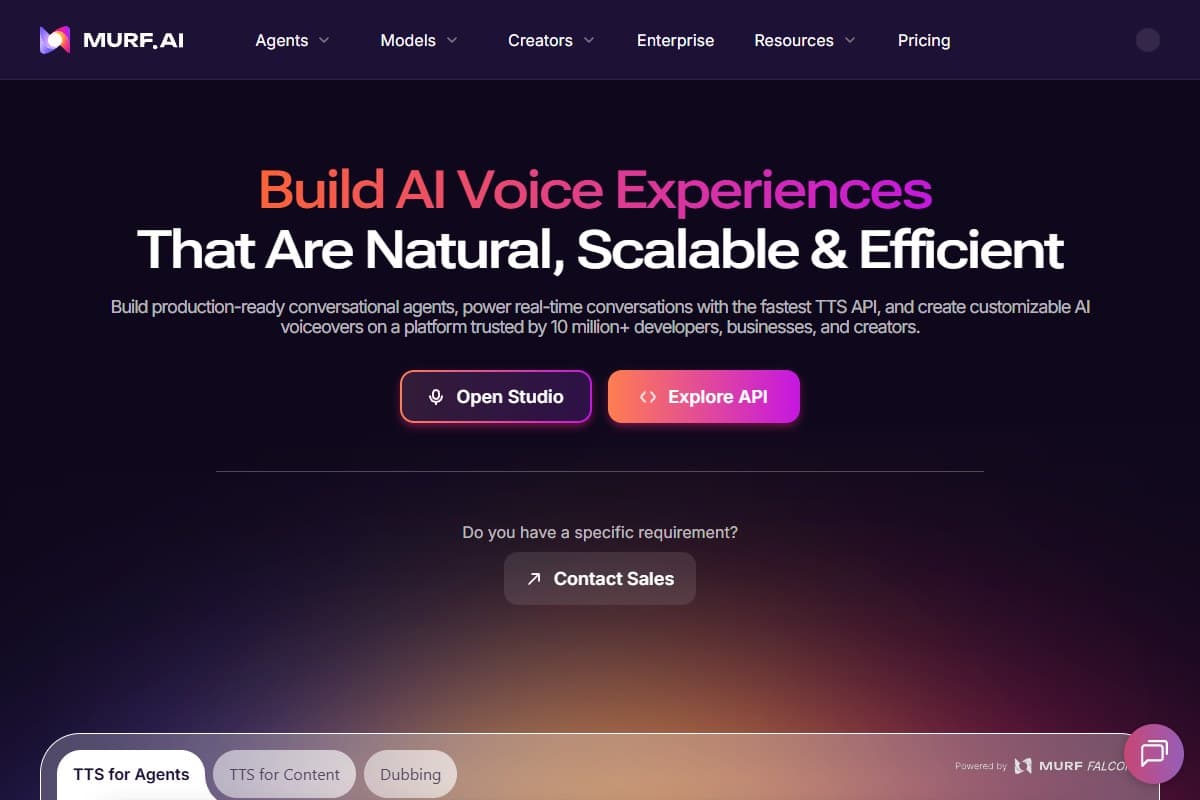
Murf AI is a text-to-speech platform built around Murf Studio, a browser-based editor that behaves less like a chatbot and more like a lightweight audio production suite. You paste a script, pick a voice, then shape the read: pitch, speed, emphasis on individual words, pauses where a human narrator would breathe. Alongside the narration track you can drop in background music and the video you are narrating, so timing is right before you export rather than after.
That framing is the whole difference. ElevenLabs hands you exceptional raw audio in a text box and leaves production to you. Murf hands you very good audio inside the workflow where voiceovers actually get made.
Key features
- 120+ voices across 20+ languages. Multiple accents per language, sorted by use case (explainer, audiobook, ad, e-learning), which saves genuine browsing time when you are matching a voice to a brief.
- Studio editor. Timeline-based editing with word-level emphasis, pitch and speed control, and pause insertion. This is where the "studio-quality" label is earned, and it is the thing ElevenLabs has no answer to.
- Collaboration. Shared projects and team workspaces on the Business tier, so a scriptwriter and an editor can work the same voiceover without emailing drafts back and forth.
- AI avatars. Generate a presenter to front the video, useful for course modules and corporate content that needs a face without booking one.
- Canva integration. Voiceover generated inside the design tool many marketing teams already live in, which removes an export-import round trip.
- Murf API. Programmatic voice generation for products and pipelines, priced separately from the creator plans.
Pricing
- Voice library and Studio editor access
- Limited generation time
- No commercial download rights
- Best for: evaluating the voices
- Full voice library
- Commercial usage rights
- Generation hours for a regular publishing schedule
- Best for: solo creators and course producers
- Collaboration and team workspaces
- More generation time
- Priority support
- Best for: agencies and content teams
At $19/month for commercial-use, studio-edited voiceover, the thing Murf really replaces is not another AI tool. It is a freelance voice actor charging around $100 per finished minute. Our Murf AI review 2026 breaks down what each tier includes in more detail.
An honest note on Murf's reputation
Murf holds 4.6 out of 5 across 185 reviews on Trustpilot, which is a strong score for a tool in this category. Reviewers consistently praise natural voice quality, an intuitive interface, and being able to produce professional-sounding audio without hiring a narrator. The recurring criticisms are worth knowing before you pay: some users find the Studio interface clunky to navigate, and pronunciation and pause controls occasionally need manual correction. That pattern, quality praised and edge cases criticised, matches what we found in our own evaluation.
- Best production workflow in the category: emphasis, pauses, music, and video sync in one editor
- Team collaboration and shared workspaces that ElevenLabs does not offer
- AI avatars and a Canva integration, neither of which ElevenLabs has
- Flat pricing that does not creep as your publishing volume grows
- 120+ voices organised by use case, which speeds up voice selection
- 4.6/5 across 185 Trustpilot reviews, with quality the most-praised attribute
- Voice cloning is meaningfully weaker than ElevenLabs
- $19/month entry is nearly four times ElevenLabs' $5 Starter tier
- The most natural voices are concentrated in English; other languages get thinner selection
- 20+ languages against ElevenLabs' 32 for dubbing and 70+ for TTS
- Free plan is for evaluation only, with no commercial download rights
- Reviewers report the Studio interface can be difficult to navigate at first
Note on the Murf link: affiliate tracking on our Murf AI link is pending verification, so we may earn nothing from signups through it. It is included because Murf wins three categories in this comparison and genuinely deserves the recommendation, not because of what it pays.
Head-to-head: five use cases that decide it
Best for YouTubers: ElevenLabs. Voice carries faceless and narration-led channels, and expressive delivery is what separates a video people finish from one they close after forty seconds. ElevenLabs is simply better at that. Murf's video sync is a real advantage if you cut to narration rather than narrate to a cut, so this one is closer than the others, but on the thing viewers actually notice, ElevenLabs wins. The wider stack is covered in our best AI tools for YouTubers roundup.
Best for course creators: Murf AI. Course production is repetitive, structured, and unforgiving about consistency: forty modules that must sound like the same narrator, with individual sentences corrected months later without re-recording anything around them. That is exactly what the Studio editor is built for, and re-rendering one fixed line beats regenerating a whole module. Murf's e-learning voices are a genuine strength.
Best for developers: ElevenLabs. Not close. The API is mature, the documentation is good, latency is workable for non-real-time use, and the pricing at roughly $180 per million characters is predictable enough to build a business model on. Murf has an API and it works, but the ecosystem, community examples, and SDK quality around ElevenLabs are on another level.
Best for podcasters: ElevenLabs. Long-form narration is where expressive range compounds. A voice that is 5% flatter is tolerable for thirty seconds and exhausting for forty minutes, and Audio Tags let you direct emphasis on the lines that carry an episode. Voice cloning matters here too: cloning a host to patch a botched line beats rebooking the recording.
Best value: ElevenLabs. $5/month against $19/month, both with commercial rights, is a real gap at the entry point. The caveat is honest: ElevenLabs meters credits and Murf does not, so a heavy publisher can climb to Creator at $22 or beyond while Murf's Creator stays flat at $19. For anyone starting out, testing, or publishing at moderate volume, ElevenLabs is clearly cheaper to enter and cheaper to run.
Who should choose ElevenLabs
Choose ElevenLabs if you are:
- A creator who needs voice cloning. A synthetic copy of your own voice for scaled content is the single clearest reason to pick it, and Murf does not seriously compete here.
- A developer building voice into a product. The API, documentation, and latency profile make this the category default for anything programmatic.
- A podcaster who needs natural narration. Expressive range matters most over long runtimes, and this is where the gap between the two tools is widest.
- A publisher dubbing content into other languages. Dubbing across 32 languages with pacing and emotion preserved turns one video into five markets.
- Anyone starting out. The free plan lets you hear the voices before spending anything, and $5/month unlocks commercial rights.
Who should choose Murf AI
Choose Murf AI if you are:
- A team needing a collaborative voiceover workflow. Shared projects and workspaces on Business have no equivalent on ElevenLabs' creator tiers.
- A course creator needing consistent studio output. Timeline editing, word-level emphasis, and sentence-level re-rendering are built for exactly this shape of work.
- A marketer using AI avatars. Avatars are part of the product rather than a separate tool to bolt on.
- A Canva user. Generating voiceover inside the design tool your team already uses removes a whole export-import loop.
- A corporate video producer. Consistency, brand-safe delivery, and a repeatable process matter more here than the last 10% of emotional realism.
What the community is saying
The three points below are paraphrased community sentiment, not direct quotes, drawn from public reviews on Product Hunt (ElevenLabs), Trustpilot (ElevenLabs), and Trustpilot (Murf AI).
- ElevenLabs reviewers keep returning to the same three strengths. Product Hunt reviewers rate it 4.9 out of 5 across 196 reviews, and the praise clusters tightly: voice quality that closely tracks human speech, cloning that works from a short sample, and an API that is clean enough to integrate quickly. Multiple reviewers describe it as clearly ahead of Amazon Polly and Google Cloud TTS rather than marginally better.
- The ElevenLabs criticism is about consistency and billing clarity, not quality. Reviewers report drift across longer scripts and repeated sessions, awkward handling of numbers and abbreviations, weaker results in some non-English languages, and pricing and credit consumption that is harder to predict than it should be. That last point matches the most-cited complaint in the wider community: generations you cannot use still consume credits.
- Murf's sentiment is strong and shaped differently. It holds 4.6 out of 5 across 185 Trustpilot reviews, with praise concentrated on natural voice quality, an intuitive interface, and producing professional-sounding audio quickly without a human narrator. The criticisms are practical rather than fundamental: a Studio interface some find clunky to navigate, and occasional pronunciation and pause-control issues needing a manual fix.
Both tools show the same healthy pattern, which is that the praise is about the core product and the complaints are about edges. Neither has the kind of criticism that should stop you buying.
Bottom Line
ElevenLabs wins for most users, and the $5 entry tier is a bigger part of that than its reputation suggests. It has the best voice cloning available, the most natural output in the category, dubbing across 32 languages, and an API developers actually build on, and it costs less than a third of Murf's entry price to start using commercially. If you are a podcaster, a YouTuber, a developer, or someone who wants a synthetic version of their own voice, this decision is not close. The credit system is the one thing to watch, because generations you cannot use still bill, so review output before regenerating and learn the Audio Tags syntax before experimenting with it.
Murf AI wins for studio workflow, and that covers more people than the scoreline implies. If your work is course modules, corporate video, or client voiceover produced with other people on a schedule, the Studio timeline editor, team workspaces, AI avatars, and Canva integration will save you more hours than ElevenLabs' extra realism will earn you, and flat $19/month pricing means the bill does not move as your volume does. The honest test is a single question: do you need a specific voice, or do you need a repeatable process? Voice means ElevenLabs. Process means Murf. If you are unsure, start free on ElevenLabs, run one real script through it, and you will know within an hour. The wider field is scored in our best AI voice generators 2026 ranking.
FAQ
ElevenLabs vs Murf AI, which is better in 2026?
ElevenLabs is better for most users. It wins on voice quality, voice cloning, language coverage, API access, and entry price at $5/month against Murf's $19. Murf AI is better for studio workflow: its timeline editor syncs narration to music and video, it supports team collaboration, and it includes AI avatars and a Canva integration that ElevenLabs does not offer. Pick ElevenLabs if you need a specific voice or maximum realism. Pick Murf if you need a repeatable production process with other people involved.
Is ElevenLabs better than Murf AI?
On raw voice technology, yes, clearly. ElevenLabs has the best cloning available and the most expressive delivery in the category, and it is cheaper to start with. On production workflow, no: Murf's Studio editor does something ElevenLabs has no real answer to, letting you shape emphasis and pauses and sync narration against your actual footage in one place. Neither is a bad tool. They win different categories, and this comparison scores it five to three in ElevenLabs' favour.
Which is cheaper, ElevenLabs or Murf AI?
ElevenLabs, at the entry point and for most realistic use. Its Starter plan is $5/month with commercial rights, against Murf's cheapest commercial tier at $19/month. Both offer a free plan, though neither free tier allows commercial use. The one caveat is that ElevenLabs meters credits while Murf's pricing is flat, so a very high-volume publisher can climb to Creator at $22/month or beyond while Murf stays at $19. For light and moderate use, ElevenLabs is substantially cheaper.
Can ElevenLabs clone my voice?
Yes, and this is its strongest feature. Instant Voice Cloning builds a usable copy from roughly a minute of audio, available from the $5 Starter tier. Professional Voice Cloning, on Creator at $22/month and above, needs several hours of clean studio-quality source audio and produces something close to indistinguishable from the original speaker. The quality of your source recording matters more than most people expect: clone from a noisy phone recording and the output will sound subtly robotic in a way listeners notice even if they cannot name it.
Is Murf AI good for YouTube?
Yes, particularly if you narrate to picture. You can load your video into Murf Studio and time narration against the actual footage, which no plain text-to-speech box lets you do, and the 120+ voice library covers explainer, energetic, and conversational reads. For faceless channels where the voice carries the content entirely, ElevenLabs' expressive range is the stronger choice. Both work well on YouTube; the deciding factor is whether you are editing to the voice or voicing to the edit.
ElevenLabs vs Murf AI for podcasts?
ElevenLabs, without much hesitation. Podcasts are long-form, and small deficits in expressive range compound over forty minutes in a way they never do over a thirty-second ad read. Audio Tags let you direct emphasis and pacing on the lines that carry an episode, and voice cloning means you can patch a botched line without rebooking a recording session. Murf is the better pick only if your podcast production is heavily edited against music and video beds, where the Studio timeline earns its place.
Does ElevenLabs have a free plan?
Yes. The free plan includes roughly 10,000 credits, about 20 minutes of text-to-speech, and lets you create up to three custom voices. The important limitation is licensing: free tier output is non-commercial only and requires attribution to ElevenLabs, so it is a way to evaluate the voices rather than a way to publish. Commercial rights start at the $5/month Starter tier, which is still the cheapest commercial entry point in this comparison.
Related reading
- ElevenLabs review 2026: the full deep dive on our winner, including where the credit system actually bites.
- Murf AI review 2026: the complete verdict on the studio workflow tool, and who should pick it over ElevenLabs.
- Best AI voice generators 2026: the whole field scored side by side, including PlayHT and the rest.
- Best AI tools for YouTubers: where a voice tool fits in the wider creator stack.
- AI Audio Tools topic hub: every audio review on the site in one place.
Got an ElevenLabs vs Murf AI question this comparison did not answer? Get in touch: reader questions shape the next round of comparisons.
Free interactive tool
Compare ElevenLabs with other AI toolsSide-by-side pricing, features, and ratings — plus a recommended pick for your use case.
Independent AI tools researcher
Keep reading
Related reviews
Best AI Voice Generators 2026: Tested & Ranked
We tested the best AI voice generators in 2026. ElevenLabs leads for voice cloning, Murf AI for studio workflow. Here is the honest verdict.
Murf AI Review 2026: Best Text to Speech Tool Tested
Murf AI offers 120+ voices, studio-quality output, and a genuine free tier. We tested it against ElevenLabs and PlayHT. Here's the honest verdict.
ElevenLabs Music v2 Just Launched: AI Music That Switches Genres Mid-Track (And Cuts Pricing Up to 50%)
ElevenLabs Music v2: mid-track genre switching, section inpainting, embedded sound effects, and up to 50% lower API pricing. My honest first-48-hours take.